


 Jan 08 2026

Launching a plastic cup production business presents significant opportunities in the current packaging landscape. As the global food and beverage sector continues to grow, the need for top-tier disposable containers has reached unprecedented levels. Nevertheless, the prosperity of your manufacturing facility hinges largely on choosing appropriate technologies, grasping the distinctions between materials, and securing high-quality machinery.This handbook delves into the critical equipment and key factors to consider when establishing a production line—ranging from standard plastic cup manufacturing machines to specialized PET processing systems.1. Core Equipment: The Plastic Cup Manufacturing Machine.
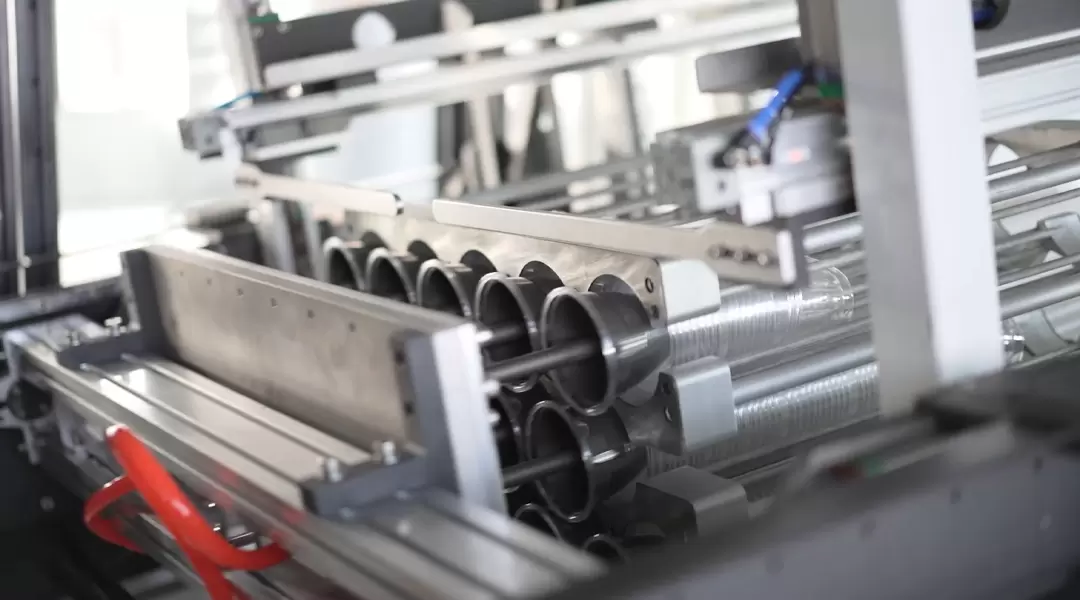
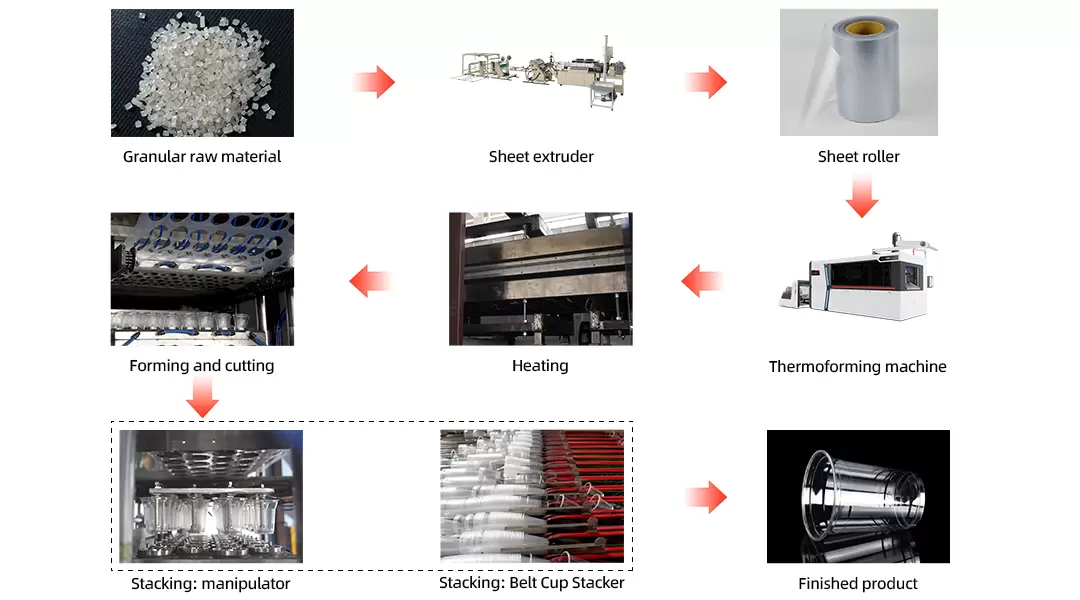
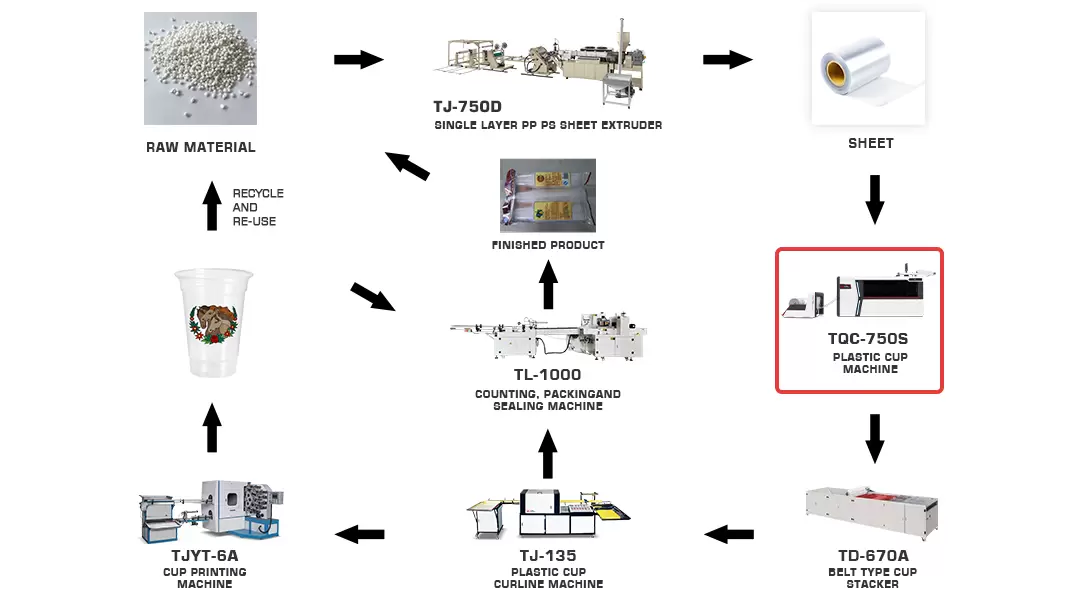
The plastic cup making machine serves as the backbone of your production operation. Advanced thermoforming technology has progressed to enable high-speed, fully automated intelligent production. Typically, plastic cup manufacturing involves heating plastic sheets and molding them into the desired cup shapes.

Investing in a high-efficiency plastic cup production system guarantees uniformity in wall thickness, cup height, rim finishing, and precision cutting. Whether your focus is on water cups, juice containers, or dairy packaging, a versatile cup-making machine is crucial for scaling your business.
2. The Growing Dominance of PET: Superior Quality and Transparency
While Polypropylene (PP) and Polystyrene (PS) remain widely used, the market is increasingly shifting toward Polyethylene Terephthalate (PET). This material is favored for its glass-like clarity and recyclability. To tap into this premium market segment, you’ll need a combination of a standard PET sheet extruder and a dedicated PET cup manufacturing machine.
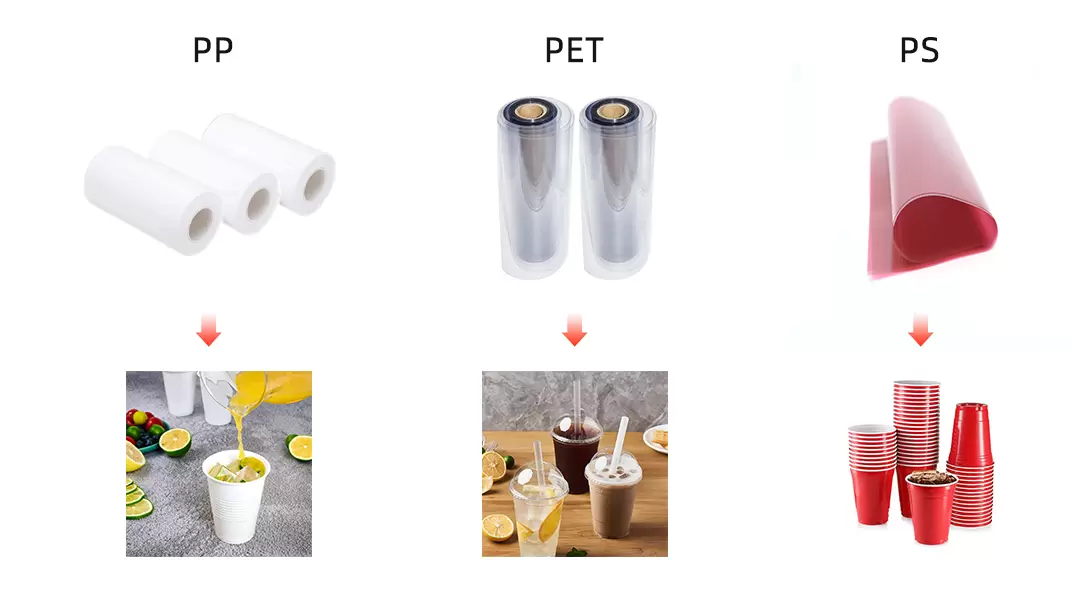
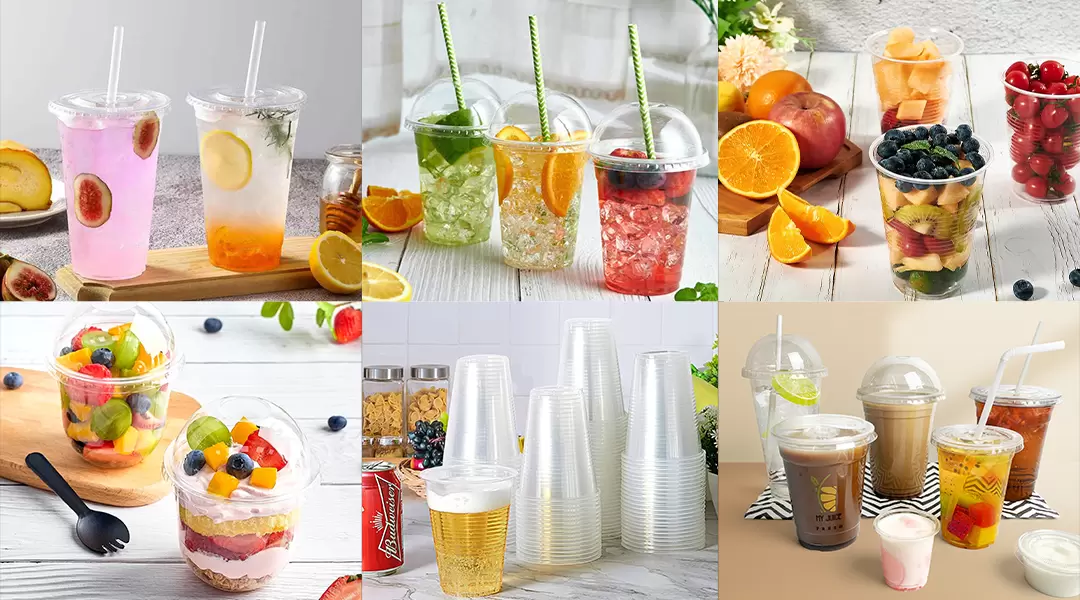
PET cup production equipment is engineered to accommodate the unique thermal characteristics of PET sheets. These machines produce what are commonly known as “crystal cups” due to their exceptional transparency. If your target customers include high-end cafes, smoothie outlets, or bubble tea chains, investing in a crystal plastic cup machine or a plastic glass manufacturing system is a must. These machines create rigid, clear cups that enhance the overall consumer experience.
3. Production Versatility
A high-performance plastic cup making machine (emphasized here to highlight equipment flexibility) should offer adaptability. The most effective production lines allow for quick mold changes to produce cups of varying sizes and shapes. A comprehensive disposable plastic cup production setup can often be reconfigured to manufacture lids, containers, or even bowls—maximizing your return on investment (ROI).
4. Global Machinery Terminology (For International Sourcing)Given the global nature of the manufacturing industry, it’s important to familiarize yourself with terminology used in key markets—especially in Latin America and Brazil, where the manufacturing sector is thriving.
When sourcing equipment or promoting your production capabilities internationally, you’ll encounter terms such as maquina para hacer vasos desechables (machine for making disposable cups) or maquina para hacer vasos de plastico. For equipment capable of producing both cups and plates, suppliers frequently use máquinas para fabricar vasos y platos desechables. In the Portuguese-speaking market—specifically Brazil—this equipment is sought after as maquina para fabricação de copos descartaveis. Recognizing these terms (including plurals like maquinas para hacer vasos de plastico) will help you navigate the global supply chain and ensure you select equipment that meets your plastic cup manufacturing project’s exact specifications.

5. Critical Project ConsiderationsWhen finalizing your business plan, keep the following machinery-related factors in mind:
Production Requirements: Determine your required output volume, as well as the specific shapes, sizes, and materials of the products you’ll manufacture.
Automation Level: Fully automated machines handle sheet feeding, cup forming, cutting, and stacking without manual intervention.
Material Compatibility: Ensure your plastic cup machine can process PP, PS, and PET if you plan to diversify your product line.
Speed: Calculate cycles per minute (CPM) to confirm your production capacity aligns with market demand.
Conclusion
Whether you’re seeking a standard plastic cup making machine for large-scale production or a specialized PET cup machine for high-clarity products, your equipment choice will directly impact your market competitiveness. By understanding the intricacies of the plastic cup production machinery market and the global demand for disposable plastic cup manufacturing technology, you can build a profitable and sustainable business.


 Recommended news


